Chondrites
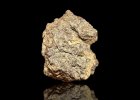
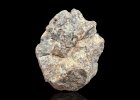
Choose from more than 400 chondrites from various locations around the world – from affordable ordinary chondrites to rare carbonaceous and enstatite meteorites. Each product includes the exact weight, origin and photographs. Unless random selection is stated, you will always receive the exact specimen shown.
✓ Authenticity guaranteed | ✓ IMCA member | ✓ Physical store | ✓ Free e-certificate with every meteorite
#ShowMore#
What are chondrites?
Chondrites are primitive stony meteorites whose parent bodies did not undergo extensive melting and differentiation. They therefore preserve very ancient material from the formation of the Solar System.
Most chondrites contain chondrules – small spherical structures composed mainly of silicate minerals such as olivine and pyroxene. Some groups are exceptions, particularly CI chondrites, in which chondrules are absent.
Main types of chondrites
Ordinary chondrites are the most common group of chondrites. According to their total iron content and the amount of iron-nickel metal, they are divided into the H, L and LL types.
- H chondrites – higher total iron and metal content
- L chondrites – lower iron content
- LL chondrites – low iron content and a low proportion of metallic material
Carbonaceous chondrites are among the rarest and most scientifically important meteorites. Some groups, particularly CI and CM, contain hydrated minerals and organic compounds. Carbonaceous chondrites include the CI, CM, CO, CV, CR, CH and CB types.
Enstatite chondrites are rich in the mineral enstatite and formed under highly reducing conditions with very little available oxygen. They are divided into the EH and EL groups.
How to choose a chondrite
Affordable ordinary chondrites and well-known observed falls are suitable for beginning collectors. Cut and polished specimens allow the chondrules, metal particles and internal structure of the meteorite to be seen more clearly.
Carbonaceous and enstatite chondrites are rarer and are particularly suitable for specialised or more advanced collections. When choosing a specimen, we recommend considering its classification, locality, weight, condition and whether it is a find or an observed fall.
Product sorting
List of products



.png?67eda4a9)